

Open return flights are useful when you know where you are going but do not know exactly when you will come back. Instead of locking yourself into a fixed return date too early, you choose a ticket or fare type that gives you room to adjust your return plans later. This guide explains what open-ended flights usually mean, how to compare flexible flight tickets, and how to book smarter without getting surprised by fare rules.
What is an open return flight?
An open return flight is a return journey where the return date is left flexible, changeable, or not fully confirmed at the time of booking, depending on the airline or booking method. In everyday travel language, people often use the term for any return plane ticket that allows them to change the inbound date with fewer restrictions than a standard economy fare.
In practice, true fully open tickets are less common than they once were. Many airlines now sell flexible round trip tickets instead, where you select an initial return date and later change it subject to the ticket conditions. That means the most important skill is not just knowing how to book open return flight ticket options, but knowing how to read the flexibility rules before you pay.
Open-ended flights can be helpful for long visits, family travel, work assignments, study abroad, backpacking, medical trips, or any journey where the return date depends on events you cannot fully control. The benefit is peace of mind: you have a return flight ticket framework in place, but you are not trapped by a date that may stop making sense.
Open return, flexible return, and one-way tickets are not the same
Travelers often use these terms interchangeably, but they can work very differently. A traditional return flight ticket includes both outbound and inbound travel on one reservation. A flexible return ticket usually includes a chosen return date but lets you change it with reduced or no airline change fees, though fare differences may still apply.
A one-way ticket gives you no return segment at all. That may sound flexible, but it can create problems if your destination requires proof of onward or return travel. It can also cost more than expected on some routes, especially when compared with round trip tickets.
Here is a simple way to think about the options:
Open or open-ended ticket: Best when available and when your return date is genuinely uncertain.
Flexible round trip ticket: Often the most practical modern option because you can book a return date now and change it later.
Standard round trip ticket: Usually cheaper, but changes may be limited, expensive, or not allowed.
One-way ticket: Useful for open travel plans, but check entry rules and onward travel requirements before relying on it.
Refundable ticket: May cost more upfront, but can be valuable if your entire itinerary might change.
The right choice depends on how uncertain your plans are, not just the ticket label. If you are likely to move your return by a few days, a flexible return may be enough. If you truly have no idea whether you will return in one month or six, ask the airline or travel agent what open-ended flights are available for your route.
Step 1: Define how much flexibility you really need
Before you start any flight ticket reservation online, decide what kind of uncertainty you are dealing with. Some travelers simply need a few days of flexibility. Others need the freedom to change countries, extend a stay, or return at short notice.
Ask yourself:
Do I know the return month, even if I do not know the exact day?
Would I be comfortable choosing a placeholder return date and changing it later?
Is there a chance I will cancel the return journey entirely?
Do I need proof of a return plane ticket for immigration, work, school, or another requirement?
Am I more concerned about the lowest fare or the lowest risk?
These questions help you avoid paying for flexibility you do not need. They also stop you from buying a cheap fare that becomes expensive the moment your plans shift.
Step 2: Search for round trip tickets first
Even if your return date is uncertain, start by searching round trip tickets. On many routes, a round trip can be more cost-effective than two one-way tickets, and it gives you a confirmed return segment if you need one.
Choose a return date that is realistic but not too close to your outbound journey. For example, if you are visiting family for an indefinite stay, select a date near the latest point you might reasonably return. Then compare fares that allow changes against basic fares that do not.
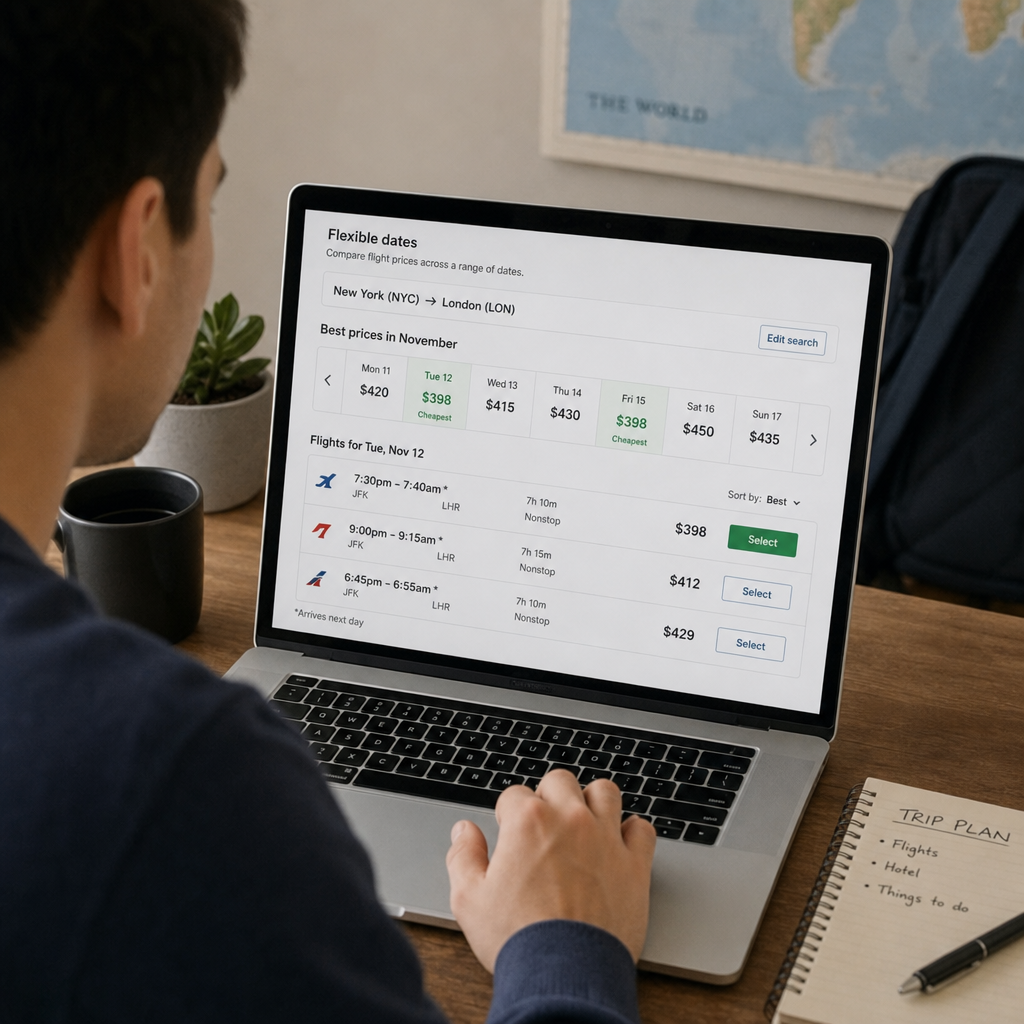
When searching, use flexible date tools if the booking site offers them. A fare calendar can show whether returning a few days earlier or later makes a meaningful price difference. This is one of the most useful flight booking tips for flexible travel because it helps you separate airline flexibility from simple date-based fare changes.
Step 3: Compare fare rules, not just prices
The cheapest ticket on the screen may be the most expensive choice if you need to change it. Fare rules explain what you can and cannot do after purchase. They may include change fees, fare difference rules, refund conditions, route limits, and deadlines for making changes.
Look closely for these details:
Change allowance: Can you change the return date at all?
Change fee: Is there a fee per change, or is the airline fee waived?
Fare difference: If the new return flight costs more, will you pay the difference?
No-show rules: What happens if you miss the outbound or return segment?
Ticket validity: How long can the ticket remain usable?
Refundability: Can you get money back, credit, or nothing if you cancel?
Same route requirement: Must you return from the same city, or can you change the origin?
Do not rely only on labels such as “flexible” or “free changes.” A ticket can have no change fee but still require you to pay a higher fare if your new return date is more expensive. That can be perfectly reasonable, but you should know it before booking.
How do you book an open return flight ticket online?
To book an open or flexible return flight ticket online, search for a round trip, select a fare that allows return-date changes, review the fare rules carefully, and confirm how changes can be made after purchase. If a website does not clearly show open return options, book directly with the airline or contact customer support before paying.
A practical online booking process looks like this:
Enter your outbound and return cities. Start with a normal round trip search rather than a one-way search.
Choose a tentative return date. Pick a date that fits the broad window of your plans.
Filter for flexible flight tickets. Look for fare families that mention changes, refunds, or flexibility.
Open the fare conditions. Read the rules for the return segment specifically, not only the outbound flight.
Compare total value. A higher fare may be worth it if it avoids heavy penalties later.
Check how changes are handled. Confirm whether you can change online, through the app, by phone, or only through the original booking agent.
Save your confirmation and fare rules. Keep a copy in case you need to reference the conditions later.
If the site allows you to hold a fare briefly before purchase, use that time to confirm visa, work, school, or family requirements. If it does not, slow down and check the rules before entering payment details.
Step 4: Consider booking directly with the airline
Online travel agencies can be convenient, but flexible travel is often easier to manage when you book directly with the airline. If you need to change your return plane ticket later, dealing with the airline’s own website or app may be simpler than going through a third party.
That does not mean third-party sites are always wrong. They can be useful for comparing prices and routes. However, when flexibility is the priority, customer service access matters. A slightly cheaper fare may not be worth it if every change requires extra handling, slower communication, or separate agency rules.
Before booking through any platform, check who controls post-purchase changes. If the airline tells you to contact the agency, and the agency has its own service process, you need to be comfortable with that arrangement.
Step 5: Watch for immigration and onward travel requirements
Some destinations may ask travelers to show proof of onward or return travel. A flexible return flight ticket can help satisfy that requirement because it shows you have a planned way to leave the country. A one-way ticket may not be enough in every situation.
Requirements can vary based on nationality, visa type, airline, destination, and length of stay. Because rules can change, check official sources or your airline before departure. Do not assume that a vague plan to book later will be accepted at check-in or border control.
If your return date is uncertain but proof of return is required, flexible round trip tickets can be a practical middle ground. You get documentation for travel purposes while keeping the ability to adjust the return date when your plans become clearer.
Common mistakes to avoid with open-ended flights
Flexible travel is easier when you avoid a few common traps. Many problems happen because travelers focus on the headline price and skip the conditions attached to the fare.
Avoid these mistakes:
Buying basic economy without checking changes. Some low-cost fares may be very restrictive.
Assuming “flexible” means free forever. Fare differences, deadlines, and route rules may still apply.
Missing the ticket validity period. A ticket may only be usable within a certain timeframe.
Changing after a no-show. If you miss a flight without changing it first, the remaining itinerary may be affected.
Ignoring agency service rules. Third-party booking policies can influence how quickly and easily changes happen.
Waiting until the last minute. Popular return dates can become expensive or unavailable.
A good habit is to make changes as soon as you know your new return window. The more options you leave yourself, the more likely you are to find a reasonable flight.
Smart flight booking tips for flexible returns
The best flexible ticket is not always the most expensive one. It is the ticket that matches your real travel risk. If your plans are only slightly uncertain, paying for a fully refundable fare may be unnecessary. If your plans are highly unpredictable, a rigid discount fare may be a false saving.
Use these flight booking tips before you commit:
Compare at least two or three return dates to understand the fare range.
Check whether changing only the return segment is allowed.
Look at nearby airports if your destination region has more than one option.
Keep all booking emails, receipts, and fare rule screenshots.
Review baggage rules again if you change airlines or fare types.
Set a reminder before your tentative return date so you do not forget to adjust it.
If traveling for work, study, or medical reasons, ask whether documentation affects change options.
You can also price a flexible round trip against a standard return plus possible change costs. If the flexible fare costs a little more but protects you from a much larger penalty, it may be the better value.
When a standard return ticket may be enough
Not every traveler needs an open return. If your dates are firm, a standard return plane ticket may be simpler and cheaper. This is especially true for short vacations, fixed events, conferences, cruises, and trips tied to school or work calendars.
A standard ticket may also work if the airline’s regular change policy is already acceptable for your needs. For example, you may be willing to pay a manageable fare difference if your return shifts by a day or two. The key is to make that choice consciously rather than discovering the restriction later.
If there is any realistic chance your return date will move, compare both options. The few extra minutes spent reviewing flexible flight tickets can save stress when plans change.
Final takeaway
Open return flights are less about finding one magic ticket type and more about choosing the right level of flexibility for your trip. Start with round trip tickets, compare fare rules carefully, and make sure the return flight ticket you buy can be changed in the way you expect.
If you are unsure, book directly with the airline or ask clear questions before payment: Can I change the return date, what will it cost, how long is the ticket valid, and who handles the change? Once you know those answers, you can travel with more confidence and less pressure to predict the exact day you will come home.